What you don’t know about your coverage can hurt you, especially when it comes to past work. Consider this
hypothetical scenario:
UNDERSTANDING THE RISK: WHEN THE PAST COMES BACK TO HAUNT YOUR CLIENT
In 2020, a concrete company poured the foundations for a large condominium complex in Texas. It was good, profitable work, and they moved on to dozens of other projects. At the time work was performed, their general liability and excess policies included completed operations coverage with no condo exclusions.
For four years afterwards, the company renewed identical policy terms. Then, in 2024, looking to reduce costs, they moved insurance agencies and switched carriers. The new policy was cheaper, but it excluded condo work. During the renewal process, no one on the company’s staff mentioned the 2020 condo job to their new agent. Why would they? That project was ancient history.
In 2025, the condo association discovered structural damage and filed suit against the concrete company, among others.
The new carrier denied coverage due to their condo exclusion. The prior carrier’s policy had expired years ago, leaving the concrete company with no active coverage for condo work and facing a potentially ruinous claim.
This isn’t a story about bad work or negligence. This is about a coverage gap that opened quietly while the insured focused on running its business. And they’re not alone. This coverage gap is unfortunately commonplace for contractors across the country.
Note: This Texas-based hypothetical example is helpful for illustration, but the application of an occurrence can vary depending on the specific facts of a claim and how coverage is interpreted under applicable state law and precedent.
WHY TRADE CONTRACTORS FACE UNIQUE LONG-TAIL EXPOSURE
Trade contractors are the boots on the ground and the lifeblood of the construction industry. They are the concrete crews, framers, roofers, and electricians (among many others) who actually perform the work. They don’t own the jobsite nor are they in charge of the project. Still, when hired, they generally agree to ensure that whoever owns the land or signs their paychecks is protected from any defective work they or their employees perform, even if those issues don’t show themselves for years after the job is complete.
This gives rise to the phrase “long-tail.” In states with heavy construction-defect litigation, a trade contractor’s risk doesn’t end after the final inspection. Construction defects, such as foundation failures or mold resulting from improper roofing or window installation, often take years to become apparent. By the time they do, the contractor’s original liability coverage may have changed or disappeared entirely.
Perhaps their premiums rose each year, and they moved agencies for a more cost-effective option. Happens all the time, right? For trade contractors, completed operations coverage protects them and their upstream parties (namely, the general contractor (GC) and owner/developer) against long-tail exposures. Additionally, and often the primary driver of obtaining proper coverage, trade contractors may purchase only the insurance their GC or developer requires. That means their completed operations coverage is vital to honoring the promises they made by written contract when initially accepting the work.

THE STATUTE OF REPOSE: A DECADE-LONG WINDOW
In states known for heavy construction defect litigation, claimants have an extended window to file suit. That time period is called the statute of repose, and it varies by state. For example:
- Texas: 10 years from substantial completion (may be shortened under certain circumstances)
- California: 10 years from substantial completion
- Florida: 7 years, with recent reforms adjusting timelines for latent defects
- Colorado: 6 years, extended to 8 years if a defect is discovered in the 5th or 6th year
- Arizona: 8 years, extended to 9 years if a defect is discovered in the 8th year
Construction-defect claims frequently arise from latent defects, defective work that is not visible or known at the time of completion. Water intrusion, shifting foundations, structural cracks, and other construction defect issues may not appear until years after a project is finished. While nearly every state has a statute of repose that sets a deadline for bringing these claims, some jurisdictions are considered more plaintiff-friendly due to longer timeframes or litigation trends.
Because statutes of repose typically begin when work is deemed complete, not when damage is discovered, contractors must maintain completed operations coverage for the full period during which a claim could be filed. Under ISO definitions, work is generally considered completed once the work called for in the contract is finished or when it has been put to its intended use.
And here’s where the trap closes: if completed operations coverage lapses midway through that period, or if contractors move their business to a lower-cost option without all necessary coverages a few years in, they may be essentially uninsured for earlier work, even if the defect traces back to a job performed under a prior policy. At best, they risk a claim denial under their current terms, with the vague hope that some earlier policy or policies will apply.
A GROWING RISK
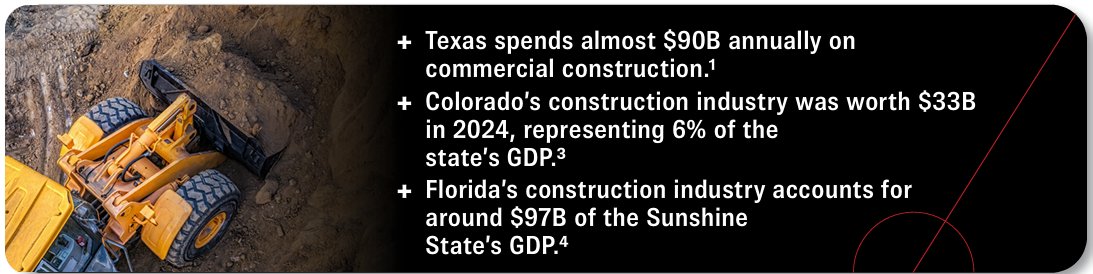
Texas, for instance, leads the nation in construction activity, with more new homes being built than any other state and tens of thousands of residential permits issued each quarter. The sheer volume of residential work, especially single-family, multifamily, and condo projects, means even “small” coverage gaps can carry massive long-tail exposure for trade contractors spanning thousands of projects. And, needless to say, the issues persist nationwide.
WHAT MAKES THIS ISSUE PARTICULARLY TRICKY
The challenge with completed operations coverage is that it only works if it remains continuous through each state’s statute of repose. This explains why, when contractors accept unique jobs like condo conversions or new-construction work, they often place that business under their own project-specific policy(ies) with extended completed operations coverage that lasts throughout the statute of repose in that state.
For trade contractors who aren’t aware and instead amend their practice policies to address each new job’s requirement(s), the issue of completed operations becomes problematic. When coverage gaps occur, or when trade contractors stop carrying coverage they previously needed for work performed three, four, or more years ago, the consequences can be devastating:
- Claim denials
- Breach-of-contract allegations from general contractors
- Irreparable reputational harm and fewer future jobs in the region, as a result
- Out-of-pocket defense costs and settlements that could bankrupt the company
Important context: This issue is somewhat unique to trade contractors because they have signed agreements mandating coverage through the statute of repose. For general contractors and developers, the discussion and risk calculus are meaningfully different, in large part because they are further up the chain and tend to pass some of their risk down to trade contractors working beneath them.
THE REALITY OF HOW COVERAGE GAPS DEVELOP
Let’s return to the concrete company for a moment. When their new carrier denied the 2025 claim, they suddenly faced a critical question: should they report the loss to their 2020–2024 carriers? And if they do, what will the result be?
This uncertainty is not unusual. It plays out constantly, particularly among smaller or fast-growing contractors who have never dealt with owner-controlled or contractor-controlled insurance (OCIP/CCIP) programs, don’t place project-specific coverage, or lack dedicated risk management staff. The condo work is attractive, the revenue is real, and, naturally, the focus is on winning the job rather than planning for long-tail exposure.
Coverage gaps typically don’t happen because contractors are careless. They happen because the system practically invites these mistakes. Contractors move quickly. Staff turns over. Old jobs fade from memory. The insurance conversation always centers on the work they are bidding today, not the work completed four or five years ago that still falls squarely within the statute of repose.
So it isn’t surprising that without education on completed operations requirements, contractors prioritize immediate opportunity over long-term protection. That’s precisely why insurance professionals must step in early. Our job is not just to place coverage for the current policy period. It is to protect the insured’s long-term interests and ensure their coverage actually matches the promises they made in their contracts.
WHAT COMES NEXT
Understanding the problem is just the first step. The next article in this series, “Preventing Completed Operations Coverage Gaps: Common Mistakes and Solutions,” will examine the common mistakes that create coverage gaps and, more importantly, the specific actions retail agents can take to protect their clients from these long-tail exposures.
We’ll cover practical guidance on job lists, carrier transitions, contractual obligations, and how to have the tough conversations that separate trusted advisors from order-takers.
Because in states where you have up to a decade of exposure after completing work, an ounce of prevention isn’t just worth a pound of cure, it’s worth the survival of your client’s business.
BOTTOM LINE
Completed operations exposure can last up to a decade, and coverage only works if it remains continuous through the statute of repose. Carrier changes, exclusions, or lapses can leave contractors unknowingly uninsured for past work.
CRC Specialty is your go-to resource for construction placements, helping retail agents structure durable coverage strategies that protect clients long after the project is complete. Reach out today to discuss how we can help your clients stay protected.
CONTRIBUTORS
- Ryan Levy is a Senior Broker with Team RTP in CRC Specialty’s Dallas, TX office.
- Matt Herzog and John Davis are Brokers with Team RTP in CRC Specialty’s Dallas, TX office.
END NOTES
- Top states for commercial construction spending, Construction Dive, June 2, 2025. https://www.constructiondive.com/news/texas-arizona-top-states-commercial-construction-spending/749408/
- Occupational Employment and Wage Statistics, Bureau of Labor Statistics. https://www.bls.gov/oes/2023/may/naics3_238000.htm
- Report warns tariffs could stall construction growth on Colorado’s Western Slope, The Aspen Times, September 29, 2025. https://www.aspentimes.com/news/tariffs-construction-growth-colorado-western-slope/
- Report: Construction industry faces price increases, Business Observer, September 12, 2025. https://www.businessobserverfl.com/news/2025/sep/12/report-construction-price-increases/